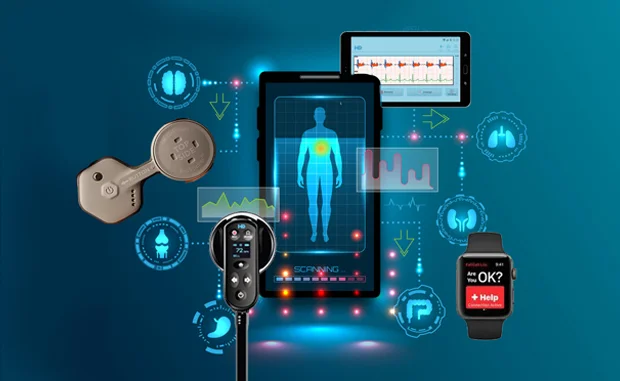
Smart Health Monitoring System
A smart health monitoring system with sensors is a technologically advanced solution designed to track and analyze various health parameters in real-time. The system typically incorporates a network of sensors that collect data from individuals, which can include vital signs such as heart rate, blood pressure, temperature, and other relevant metrics.
These sensors are often wearable or embedded in devices, allowing continuous monitoring without hindering the user's mobility. The collected data is then transmitted wirelessly to a central hub or a cloud-based platform, where sophisticated algorithms analyze the information. The system can provide insights into a person's overall health, detect anomalies, and generate alerts for healthcare professionals or the users themselves.
Key components of such a system may include wearable devices, biometric sensors, connectivity solutions (such as Bluetooth or Wi-Fi), a cloud-based infrastructure for data storage and analysis, and user interfaces such as mobile apps or web portals. The integration of artificial intelligence and machine learning algorithms enhances the system's capability to detect patterns, predict health issues, and offer personalized recommendations.
Ultimately, a smart health monitoring system with sensors aims to empower individuals to proactively manage their health, enable early detection of potential issues, and facilitate timely interventions, thereby contributing to improved healthcare outcomes and overall well-being.